
A little Sunday night inspiration to help calm COVID anxiety. Stay tuned for part 2 when we show acupuncture points and a yoga pose to calm COVID anxiety! Thank you to Danna Faulds for the inspiration!
Tag: anxiety
Gallbladder 40 (Seeing over the mountain with eyes full of hope)
 Acupuncture points can be used to relieve stress, anxiety and depression – and most especially…COVID and election anxiety. Acupuncture points are a bit like prescriptions. Each point has a different function. These points impact not just the physical body but the emotions.
- Liver 3 helps calm the urgency of our planning – and the anger at our broken plans.
- Gallbladder 40 can clear the mind. It helps us have the courage to say is this what I really care about and re-examine our plans. It can give us a new perspective, more connected to courage and heart.
- Fear often stagnates Qi and blood flow causing frustration and anger. When we pair Liver 3 with Large Intestine 4 we smooth not only blood circulation but we enable our emotions to flow more smoothly. Also, Large Intestine 4 can expel the damage from wind, and in chinese medicine, change is a type of wind. There’s been so much change during the pandemic!
- Stomach 36 can help us digest and process our experiences, even when they are difficult ones.
- Anxiety and fear deplete yin, which is like body fluids. Spleen 6 is a point where 3 yin channels connect, so it’s a strong point to nourish yin.
- Liver 14 is called the gate of hope, and encourages the part of us that hopes to continue to dream of better things.
- Heart 7, also called “spirit gate” is able to stabilize the pulse so that it is easier for a person to consider what they care about most, instead of what others care about. As consciousness resides in the heart, it helps to feel more heart stability as a person considers a new perspective.
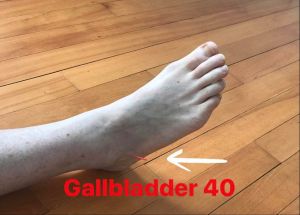 The intention I often have when I do this treatment is embodied in the point Gallbladder 40, known as “Spirit Mound.” The image is of someone climbing up a mountain, and as they look over the top of the mountain, instead of seeing a desolate blackened world that fills one with apathy, anxiety, depression, and stress… the world seems full of adventure and opportunities and love and friendships and things worth fighting for. When I do this treatment I want people to feel they have climbed a mountaintop and even though it has been hard they still feel life is beautiful. It’s so easy to feel stressed, anxious and depressed. It’s so easy to respond with anger or apathy. But having even just a little spring in your step, even just a little more hope in your heart can make all the difference. Especially when that difference has to be found within, not from without.
Acupuncturist Kat
PC: Unsplash, Joel Mott
Insomnia and the heart
In acupuncture there are different types of insomnia. There is liver insomnia, where you wake up at 3am and can’t get back to sleep. There is spleen insomnia where you never feel rested and sometimes you snore a lot from all the phlegm. Difficulty falling asleep can be heart or/and blood deficiency insomnia. Waking up from hot flashes d uring the night indicates yin deficiency. Stomach heat can create a restless agitated type of insomnia where you can’t bear to wear clothes. But no matter what type of insomnia you have, it all affects the heart. Why? Because although insomnia can come from the different organs not functioning as well as they should, in Asian medicine it’s the heart that processes the emotions and it’s the heart where consciousness resides. So it’s the heart that feels it when any part of the body isn’t functioning well bc it’s the organ that handles emotions. This is such a part of Asian philosophy that although the heart is the “emporer” of the body, it has a special protector – known as the pericardium, which has its own meridian. Insomnia impacts both. That’s why no matter what type of insomnia you have, you may feel anxious or have heart palpitations – because that’s the heart trying to cope. Sometimes it copes well or the pericardium does a great job of absorbing the shock of emotion so it’s less intense. Sometimes it doesn’t. Rose essential oil and rose teas are great at helping the heart manage difficult emotions. There are also acupuncture points and herbal formulas your acupuncturist may recommend if you have insomnia.
❤️ Acupuncturist Kat
PC: Unsplash
 Acupuncture Nirvana